
INDUSTRY NEWS
CFPB FEBRUARY SNAPSHOT
If you haven’t been keeping up with the constant stream of Consumer Financial Protection Bureau (CFPB) updates, here’s a quick overview of the key developments this month. The CFPB saw major upheaval, with Director Rohit Chopra dismissed and Treasury Secretary Scott Bessent taking control, leading to an immediate freeze on CFPB activities. This was followed by mass layoffs of up to 95% of staff, sparking legal challenges and concerns over consumer protection gaps.
Despite these shake-ups, new court filings reveal that the Trump administration intends to streamline—not dismantle—the CFPB. The agency’s headquarters lease has been canceled, but core functions like consumer complaints, mortgage data reporting, and enforcement-related payments will continue. Meanwhile, House and Senate lawmakers have introduced legislation to eliminate all CFPB funding, with efforts underway to fast-track the measure through budget reconciliation, potentially bypassing a Senate filibuster. However, a federal judge has temporarily blocked the Trump administration from dismantling the agency, adding another layer of uncertainty.
During his February 27 confirmation hearing, Jonathan McKernan signaled a shift in direction for the CFPB, criticizing the agency for overstepping its authority and claiming it has harmed consumers by increasing costs and reducing choices. He emphasized a focus on targeting bad actors while ensuring enforcement aligns with statutory authority. His nomination is expected to move forward, setting the stage for a redefined CFPB under the new administration.
Looking ahead, the House Financial Services Committee has scheduled a hearing for March 26 titled “A New Era for the CFPB: Balancing Power and Reprioritizing Consumer Protection.” These developments raise key questions about the CFPB’s future, making McKernan’s confirmation hearing a pivotal moment in determining the agency’s role moving forward.
WEBINAR
MUST WATCH FOR MONEY TRANSMITTERS
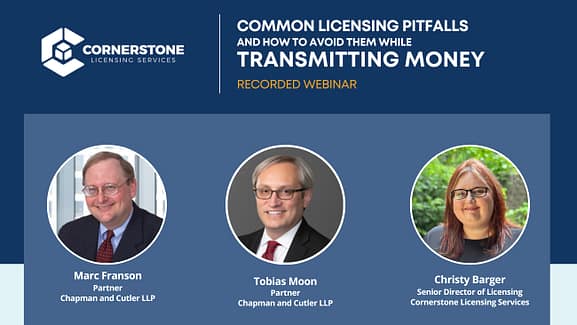
Navigating the complex landscape of state-by-state licensing in the Money Transmitter and Money Service Business (MSB) industry can be daunting. Watch an engaging and informative webinar, where industry experts share practical strategies to help you stay compliant, avoid costly mistakes, and manage licensing requirements effectively. Our panelists discuss common licensing challenges, provide tips to avoid issues and discuss best practices.
Whether you’re expanding into new states, struggling to keep up with multi-state requirements, or simply looking to enhance your compliance process, this webinar will equip you with the tools and knowledge you need to succeed. Don’t miss the opportunity to gain valuable insights from licensing and legal experts.
WATCH NOW
NEW YORK
BILL INTRODUCES LICENSING FOR DEBT COLLECTORS
New York’s AB5537 requires consumer debt collectors to obtain a state license, centralizing regulatory oversight under the state superintendent. The measure defines consumer debt collectors as those primarily engaged in debt buying or collection of defaulted debts, including creditors using third-party names.
Certain entities, such as employees collecting on behalf of a licensed collector, public officers, and loan servicers handling current accounts, are exempt from licensing. The bill also allows New York City to enforce its own debt collection laws, provided they meet or exceed state protections. If passed, licensing requirements would take effect on January 1, 2028, with all other provisions effective 180 days after signing.
Cornerstone will be monitoring progress on this bill and providing updates.
INDUSTRY NEWS
OKX FINED $500M FOR OPERATING WITHOUT A LICENSE
Cryptocurrency exchange OKX’s affiliate, Aux Cayes FinTech Co. Ltd, has settled with the DOJ and agreed to pay over $500 million in penalties for operating without a U.S. money transmitter license and failing to follow anti-money laundering laws. The company will forfeit $420.3 million in illicit earnings from U.S. customers and pay an $84.4 million criminal fine.
Authorities stated that OKX knowingly served U.S. customers without proper authorization, allowing illicit transactions to occur and even advising users on how to circumvent compliance procedures. This case serves as a clear warning to financial service providers—operating without a proper license can lead to severe penalties and legal consequences.
INDUSTRY NEWS
EXECUTIVE ORDER EXPANDS OVERSIGHT OF INDEPENDENT AGENCIES
On February 19, President Trump signed an executive order requiring independent agencies, including the SEC, FCC, and FTC, to submit proposed regulations for presidential review before finalization. The order aims to align agency rulemaking with administration priorities, reducing their long-standing autonomy.
Key provisions include White House review of regulations, presidential interpretation of legal matters, and budgetary oversight by the Office of Management and Budget. While the Federal Reserve’s monetary policy is exempt, the order represents a significant shift in federal regulatory authority.
The order is expected to face legal challenges, as it raises questions about the separation of powers and the independence of regulatory agencies.
INDUSTRY NEWS
CFPB RULE ON MEDICAL DEBT DELAYED
A Texas federal court has paused the CFPB’s rule banning medical debt from consumer credit reports, delaying its effective date from March 17 to June 15. The rule, which prohibits credit bureaus from reporting unpaid medical bills and lenders from considering medical debt in credit decisions, faces a legal challenge from industry trade groups arguing it exceeds the CFPB’s authority under the Fair Credit Reporting Act (FCRA).
Under new leadership, the CFPB has suspended all pending rules, adding further uncertainty to the regulation’s future. Debt collectors and financial service professionals should closely monitor the litigation, as the delay could lead to further postponements or even full invalidation of the rule.
INDUSTRY NEWS
STATE EFFORTS TO REGULATE EWA SERVICES CONTINUE TO EXPAND
States are continuing to introduce new regulations on earned wage access (EWA) services, with recent legislative efforts in Ohio, Arizona, Oregon, Maryland, Arkansas, Idaho, Kentucky, and Washington aimed at increasing oversight and consumer protections. Licensing requirements are a key focus, with multiple states mandating EWA providers obtain licenses and comply with reporting obligations.
Many of these proposed measures prohibit sharing fees with employers, requiring credit checks, or using debt collection practices to recover outstanding funds. States like Arizona and Oregon are also introducing strict disclosure and consumer rights policies, ensuring transparency on fees, voluntary tips, and repayment terms. Interest caps and fee restrictions are also emerging, such as Maryland’s limit on EWA fees and Washington’s cap on expedited delivery charges.
While these laws seek to differentiate EWA services from loans and money transmission, they also introduce new compliance burdens for providers. With more states considering similar legislation, the regulatory landscape for EWA services is rapidly evolving, requiring providers to stay ahead of requirements.
Cornerstone will be monitoring progress on these bills and providing updates.
CONNECTICUT
EXPANDED LICENSING AND OVERSIGHT FOR FINANCIAL SERVICES
Connecticut’s proposed bill, SB 1257, seeks to introduce new licensing and registration requirements for financial service providers, aiming to enhance oversight and standardize industry practices. If passed, mortgage lenders would need to register as exempt mortgage servicers before conducting business, while commercial financing brokers claiming an exemption would also need to register and pay a $1,000 fee. Private student loan servicers would be required to register annually and provide clearer guidelines on cosigner release options, starting in October 2025.
For debt collectors and lenders, the bill proposes updated licensing rules and would prohibit unlicensed small loan lenders from collecting payments, reinforcing compliance expectations. It would also simplify legal name changes for collection agencies, mortgage servicers, and other financial entities.
Cornerstone will be monitoring progress on this bill and providing updates.
CORPORATE TRANSPARENCY ACT
PAUSED BOI REPORTING ENFORCEMENT
FinCEN announced that it will not issue fines, penalties, or enforcement actions for failure to file Beneficial Ownership Information (BOI) reports under the Corporate Transparency Act until new deadlines are set in an upcoming interim final rule.
Businesses now have additional time to comply, with FinCEN planning to extend reporting deadlines and solicit public feedback on potential revisions to minimize regulatory burdens. A new rule is expected by March 21, 2025, offering further clarity on compliance requirements.
CORNERSTONE CAN HELP
Cornerstone can handle your BOI filing with FinCEN, saving you time and ensuring accuracy. If you’re a client, we likely have all the information needed to file on your behalf.
Connect with us to learn more or move forward. If you are already a Cornerstone client, please book time directly with Beth Aide, Sr. Customer Success Manager.
CONNECT WITH US
INDUSTRY NEWS
ACT REINTRODUCED TO TARGET AI-POWERED ROBOCALLS
The QUIET Act to combat AI-powered robocalls has been reintroduced. The bill seeks to double financial penalties for scammers using AI-generated voices to impersonate individuals or businesses and would require immediate disclosure when AI is used in robocalls or text messages.
For financial service professionals, this could further complicate phone-based outreach, adding new compliance challenges under the Telephone Consumer Protection Act (TCPA). AI-driven scams have made fraud more sophisticated, leading to increased concerns for consumers and businesses. If passed, the QUIET Act would tighten robocall regulations and increase penalties for fraudulent AI use, impacting both legitimate and deceptive phone communications.
INDUSTRY NEWS
STATE LAWMAKERS PUSH DIGITAL ASSET AND BITCOIN LEGISLATION
At least 31 states have introduced bills related to Bitcoin and digital assets, reflecting a growing state-level push for regulatory clarity and investment opportunities. Some states, including Arizona, Florida, Georgia, Iowa, and Kansas, are considering allowing public funds or retirement systems to invest in Bitcoin. Others, such as New Jersey and New York, are focusing on blockchain technology regulation and study commissions.
Several states, including Texas, Ohio, and Oklahoma, have proposed creating Bitcoin reserve funds, while Indiana and Michigan have introduced legislation on crypto mining and financial innovation. However, some bills have already failed, including efforts in Wyoming, Pennsylvania, North Dakota, and Mississippi.
This surge in legislation follows President Trump’s executive order establishing a federal framework for digital assets, highlighting a shift toward greater regulatory oversight and potential state-level adoption of cryptocurrency.
BLOG POST
MAINTAIN GOOD STANDING STATUS: TIPS FOR BUSINESSES

Maintaining good standing is essential for any LLC or corporation to operate smoothly and protect its legal and financial health. Missing filings, failing to pay taxes, or overlooking state-specific requirements can lead to penalties, administrative dissolution, and even personal liability for business owners.
Want to safeguard your business? Read the full article to learn about common pitfalls and strategies to stay in good standing.
READ MORE
ILLINOIS
NEW PROTECTIONS FOR MEDICAL DEBT COLLECTION
A newly introduced Illinois Senate Bill 1223 aims to strengthen patient protections under the Fair Patient Billing Act, restricting medical debt collection practices, particularly for patients appealing health insurance decisions. If passed, the bill would prohibit medical creditors and debt collectors from pursuing collections, lawsuits, or selling debt while an insurance appeal is pending or was resolved within the past 180 days.
Additionally, the bill caps interest on medical debt at 2% annually for patients on payment plans and eliminates interest for those qualifying for financial assistance. It also clarifies that medical providers forgiving portions of patient costs do not violate insurer contracts.
These changes could significantly impact medical debt collection practices, requiring policy adjustments in response to stricter patient protections.
INDUSTRY NEWS
BRINK’S USA SETTLES $42M CASE OVER UNLICENSED MONEY TRANSMITTING
Brink’s USA has agreed to pay $42 million in penalties after admitting to operating as an unlicensed money transmitter and violating the Bank Secrecy Act (BSA). The company failed to register with FinCEN and lacked an anti-money laundering (AML) program, leading to unlawful transactions totaling over $800 million.
Key violations included illegally transporting $15 million between U.S. money service businesses and importing over $35 million from Mexico, without verifying the final beneficiaries of the funds. This case underscores the critical importance of proper licensing and regulatory compliance for money transmitters to avoid severe penalties and legal consequences.
CORNERSTONE CAN HELP
COMMERCIAL INSURANCE
Did you know Cornerstone offers robust insurance services to safeguard your business? Simplify your operations by having licensing and insurance handled under one roof.
Our promise is to cut through the jargon and hidden clauses that often leave businesses unprotected when they need it most. We leverage our relationships with vetted global insurance brokerage firms to give you the benefit of buying power, and we shop the market to make sure you get the best value in coverage and pricing, saving you time and energy.
Our insurance experts are excited and ready to answer your questions. Let us handle the legwork so you can focus on what matters—growing your business.
GET STARTED
NEW YORK
AG ISSUES DEBT COLLECTION PROTECTION GUIDE
NY Attorney General has released a consumer guide on protecting bank accounts from illegal garnishments under the Exempt Income Protection Act (EIPA). In 2025, the law shields up to $3,960 in NYC and $3,720 elsewhere, ensuring essential funds and benefits like Social Security and retirement accounts remain protected.
The AG’s office is cracking down on violations, securing over $1 million in settlements from companies that unlawfully turned over protected funds. This signals increased scrutiny on financial institutions and debt collectors, emphasizing the need for strict adherence to consumer protection laws.
INDUSTRY NEWS
RISE OF DIGITAL WALLETS AND PUSH FOR REGULATION
Digital wallets are quickly transforming cross-border payments, with 42% of consumers in key markets preferring them over traditional methods. The U.S. leads adoption, with 44% of consumers using digital wallets for international transactions, particularly for remittances. Speed, convenience, and ease of use make them a preferred choice, but interoperability challenges remain.
Despite their popularity, digital wallets operate outside traditional banking regulations, raising concerns about consumer protections, data security, and uninsured balances. Experts argue that stricter regulations should be introduced to limit data collection and prevent potential financial risks. Some advocate for public digital wallet infrastructure to provide safer, government-backed alternatives. As digital wallets continue to grow, the debate over innovation vs. regulation is set to shape the future of digital payments.
INDIANA
MEDICAL DEBT REFORM BILL ADVANCES
Indiana’s Senate Bill 317 has advanced through committee, introducing new consumer protections for medical debt collection. The bill requires hospitals to offer 24-month payment plans, with monthly payments capped at 10% of household income. It also mandates clear financial assistance disclosures, ensuring patients are informed of charity care and payment plan options.
For low-income individuals (earning under 250% of the federal poverty level), the bill prohibits wage garnishment and liens on primary residences due to medical debt. With $2.2 billion in medical debt in collections, lawmakers say the bill offers much-needed relief. The legislation now heads to the full Senate for a vote, before moving to the Indiana House for further consideration.
Cornerstone will be monitoring progress on this bill and providing updates.
BLOG POST
STATE-BY-STATE LICENSING CHALLENGES IN MONEY TRANSMISSION

Navigating money transmission licensing is no easy feat. With state-specific rules, varying financial requirements, and inconsistent documentation standards, compliance can be a complex process for businesses looking to operate across multiple states. From varying definitions of money transmission to unique surety bond requirements and lengthy approval timelines, businesses must carefully manage each state’s regulations.
Read the full article to learn more about key licensing hurdles and best practices for streamlining the process
READ MORE
WASHINGTON
BILL ADVANCED TO RESTRICT MEDICAL DEBT COLLECTION
Washington’s Senate Bill 5480 proposes significant restrictions on medical debt reporting, making any medical debt reported to a credit bureau legally void and unenforceable. If passed, hospitals, healthcare providers, and collection agencies would be prohibited from furnishing medical debt information to credit reporting agencies. The bill also requires medical debt contracts to comply with this rule, or else they would be considered unenforceable.
The legislation broadens the definition of medical debt to include unpaid medical services, products, or devices, but excludes cosmetic procedures unless they are reconstructive. Violations would be classified as unfair or deceptive acts under Washington’s Consumer Protection Act. As the bill moves forward, industry groups warn of potential financial strain on providers, while supporters argue it will protect consumers from long-term financial hardship.
NORTH DAKOTA
MOVES TO REGULATE CRYPTO KIOSKS AMID RISING SCAMS
North Dakota lawmakers are advancing a bill to regulate cryptocurrency kiosks, following $6 million in crypto scam losses in 2023. The measure, overwhelmingly approved by the state House, would require kiosk operators to be licensed and implement consumer protections, such as providing receipts to create a paper trail for law enforcement.
Crypto kiosks, which convert cash to digital assets, have become a fraud target, with scammers tricking victims into depositing money under false pretenses. Industry concerns led to compromises in the bill, including daily transaction limits. With fraud affecting both older and younger consumers, experts stress the need for stronger oversight as the bill moves to the state Senate.
WEBINAR
LICENSING FOR MORTGAGE PROFESSIONALS
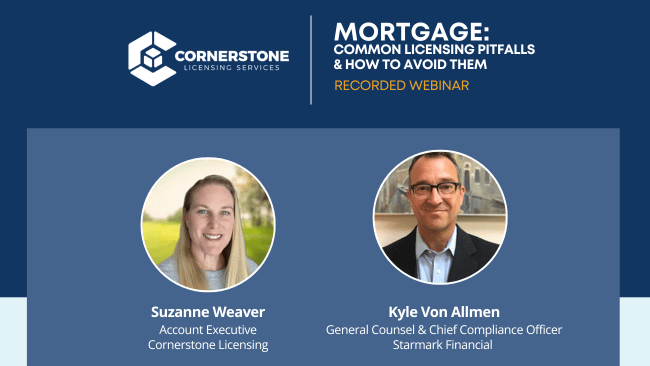
Navigating mortgage licensing requirements can be complex, and even small missteps can lead to costly delays or compliance risks. In this webinar, we cover the most common licensing pitfalls, from missing renewal deadlines to mismanaging multi-state requirements, and provide practical strategies to avoid them. Our experts share insights on staying ahead of regulatory changes, leveraging technology for compliance, and building a strong internal licensing process.
WATCH NOW
ILLINOIS
LICENSING RULES PROPOSED FOR DEBT RESOLUTION SERVICES
A proposed IL bill seeks to establish the Debt Resolution Services Act, which would require debt resolution service providers to obtain a state license and maintain a surety bond of up to $50,000. If enacted, the bill would prohibit unlicensed individuals from offering debt resolution services and restrict certain practices, such as using power of attorney, sending cease-and-desist letters, or initiating unauthorized bank transfers.
Under the proposal, licensees could only charge fees after successfully renegotiating or settling a debt, ensuring fees are proportional to the resolved debt amount. The measure would not apply to banks, licensed attorneys, or creditors handling debt negotiations directly. If passed new oversight would be introduced for debt resolution companies.
Cornerstone will be monitoring progress on this bill and providing updates.
INDUSTRY NEWS
PAUSE ON CFPB SMALL BUSINESS LENDING DATA RULE
The Fifth Circuit Court of Appeals has ordered a pause on compliance deadlines for the CFPB’s Small Business Lending Data Collection Rule while litigation continues. Although the pause technically applies to the trade associations involved in the lawsuit, the CFPB has indicated that all lenders covered by the rule may benefit from the tolling. However, the court did not specify how long the delay will last or when the tolling period officially began.
Meanwhile, lawmakers are pushing to repeal Section 1071, arguing that the rule increases compliance costs for financial institutions and may reduce small business access to credit. The outcome of both the litigation and legislative efforts could significantly impact small business lending regulations and data reporting requirements for financial institutions.
VIRTUAL SUGGESTION BOX
We’ve continued to hear great feedback from you, our clients, on how our newsletter provides value for your organization. To ensure we continue to research and provide the best data, we have created a virtual “suggestion box” for your ideas. Whatever topic you’d like to learn about, large and small, we will go research with our team and knowledgeable folks from our industry.
SUGGEST A TOPIC
CALIFORNIA
RAISES MORTGAGE FRAUD RISK FOR BUSINESS PURPOSE LOANS
California, effective January 1, 2025, introduced new felony mortgage fraud provisions that could impact mortgage lenders and brokers handling business-purpose loans secured by owner-occupied properties. The law makes it a felony for a lender or broker to knowingly instruct a borrower to sign documents stating a loan is for business purposes when it is actually for personal use. It also applies to bridge loans that are not used to acquire or build a new primary residence.
While aimed at preventing predatory lending, the law opens the door for borrowers in default to claim fraud, creating legal risks for lenders. Mortgage professionals should review and strengthen their loan documentation processes, including obtaining written business-purpose statements, financial records, and business account funding confirmations. Implementing clear policies and documentation safeguards will be critical to mitigating potential fraud claims under AB 3108.
BLOG POST
FAIR LENDING: AI IN ALGORITHMIC DECISIONS

As AI-driven lending and alternative credit models expand, regulators are sharpening their focus on transparency, fairness, and potential bias in credit decisions. While these tools can improve risk assessment and expand access to credit, concerns over opaque decision-making and unintended discrimination are prompting stricter oversight.
How can lenders balance innovation with fairness? Read the full article to explore key challenges, regulatory expectations, and best practices for responsible AI-driven lending.
READ MORE
BEYOND THE NEWSLETTER

Head to LinkedIn and give us a follow to tap into a stream of real-time updates, legislative changes, and great content tailored for ARM and Fintech professionals. Engage with thought leaders and peers in our community to enhance your expertise.
Follow Cornerstone on LinkedIn and transform the way you stay informed in our ever-evolving industry.
FOLLOW US
NEW YORK
BNPL PROPOSED LICENSING AND OVERSIGHT
New York’s Buy Now Pay Later Act, proposes new licensing requirements for Buy-Now-Pay-Later (BNPL) lenders, requiring them to obtain a license from the Superintendent of Financial Services before operating. If passed, the bill would require comprehensive disclosures on loan terms, repayment schedules, and data usage while prohibiting unfair, deceptive, or predatory practices.
The bill also mandates that licensees maintain clear refund and dispute resolution policies, prohibits BNPL lenders from reporting consumer data to credit bureaus without authorization, and restricts data collection without consumer consent. Additionally, unlicensed BNPL loans would be considered void and uncollectible, reinforcing the need for compliance. If enacted, this measure would establish strict oversight, ensuring BNPL lenders operate transparently and responsibly in New York.
Cornerstone will be monitoring progress on this bill and providing updates.
This information is not intended to be, nor is it, legal advice. It is intended for information purposes only. We make no warranty, express or implied, as to the accuracy or reliability of this information. We are not attorneys. You must retain your own attorney to receive legal advice. While Cornerstone strives to provide the most current and accurate state licensing information, the responsibility for any decision related to state licensing or agency compliance is solely yours.