On this page
- NEW LICENSING & REPORTING REQUIREMENTS
- OCC FINALIZES GENIUS ACT RULE FOR PAYMENT STABLECOIN ISSUERS
- CALIFORNIA COMMERCIAL FINANCING BILL IS NOW LAW
- FLORIDA PAYMENT STABLECOIN LAW TAKES EFFECT, ADDITIONAL RULEMAKING UNDERWAY
- VIRGINIA FINAL MONEY TRANSMITTER RULES TAKE EFFECT OCTOBER 1
- RESOURCES & WEBINARS
- RECORDED WEBINAR: LICENSE RENEWAL SEASON WITHOUT THE SCRAMBLE
- SPONSOR BANK TRANSITION READINESS CHECKLIST
- OPERATIONAL CHANGES
- FCC UPDATES TCPA REVOCATION RULES FOR CALLS AND TEXTS
- HAWAII BANS CASH-TO-CRYPTO KIOSK PURCHASES
- PROPOSALS & REGULATORY WATCH
- NEW JERSEY BILL WOULD CREATE LICENSING FRAMEWORK FOR BNPL LENDERS
- CSBS PRESSES TREASURY ON STATE-FEDERAL PARITY IN STABLECOIN RULE
- ILLINOIS DIGITAL ASSET TAX IMPLEMENTATION STAYED UNTIL JULY 2027
- WYOMING DIGITAL ASSET AND MONEY TRANSMISSION LEGISLATION
- ENFORCEMENT
- NEW YORK AG SECURES $480K PLUS DEBT RELIEF OVER TIME-BARRED SECOND MORTGAGE COLLECTION
- MICHIGAN DIFS CONSENT ORDER LINKS SERVICING FAILURES TO STATE LICENSING OVERSIGHT
Cornerstone's newsletter covers the state licensing, registration, and reporting developments that matter most to financial services companies. Each issue highlights what changed, where it applies, and what teams should review next.
NEW LICENSING & REPORTING REQUIREMENTS
OCC FINALIZES GENIUS ACT RULE FOR PAYMENT STABLECOIN ISSUERS
The Office of the Comptroller of the Currency (OCC) has finalized its rule implementing the GENIUS Act, establishing a federal regulatory framework for permitted payment stablecoin issuers and related custody activities under its jurisdiction. Effective January 18, 2027, the rule addresses reserve requirements, redemption obligations, risk management, reporting, oversight, and application requirements. The OCC also released related reporting forms and guidance on applications and waivers on October 21.
For fintechs, payment companies, and digital asset businesses, the framework provides greater clarity on federal oversight, but it does not automatically eliminate state licensing obligations. Companies evaluating stablecoin activities should review how the federal requirements intersect with their existing state licenses and planned business models.
CALIFORNIA COMMERCIAL FINANCING BILL IS NOW LAW
California Governor Newsom signed AB 2116 into law on September 30, significantly expanding licensing and oversight requirements for small-business commercial financing under the California Financing Law. The law extends licensing requirements beyond traditional commercial lenders to include providers and brokers of products such as merchant cash advances, factoring, asset-based lending, commercial loans, commercial lines of credit, and certain lease financing arrangements. The requirements generally apply to covered financing transactions of $500,000 or less, subject to specified exemptions.
In addition to licensing, the law introduces new consumer protection standards for small-business financing, including restrictions on unfair or deceptive practices, enhanced reporting and recordkeeping obligations, and requirements related to evaluating a business's ability to repay. The broader regulatory provisions take effect January 1, 2028, while licensing requirements begin July 1, 2028. Businesses that submit a complete license application by the July deadline may generally continue operating while awaiting a decision. Commercial financing providers and brokers should begin evaluating their products, licensing status, and operational practices well ahead of implementation.
FLORIDA PAYMENT STABLECOIN LAW TAKES EFFECT, ADDITIONAL RULEMAKING UNDERWAY
Florida's new payment stablecoin issuer law took effect on October 1, 2026, establishing a state regulatory framework for companies issuing payment stablecoins. The law introduces licensing or certificate-of-approval requirements, 1:1 reserve backing, monthly reserve disclosures with CEO and CFO certifications, and additional reporting obligations. Issuers reaching $10 billion in outstanding stablecoins are generally required to transition toward federal oversight, subject to applicable exceptions and waivers.
On October 26, the Florida Office of Financial Regulation published a rule-development notice addressing additional capital, liquidity, and risk management requirements. For companies exploring digital asset activities in Florida, the law establishes new licensing and operating obligations, with further regulatory details still under development.
VIRGINIA FINAL MONEY TRANSMITTER RULES TAKE EFFECT OCTOBER 1
Virginia's updated money transmitter regulations under 10VAC5-120 took effect October 1, 2026, completing the state's implementation of the Money Transmission Modernization Act (MTMA). The amendments align Virginia's administrative rules with Chapter 19.1 of Title 6.2, which replaced the state's prior money transmission statute on July 1, 2026. The updated regulations address definitions, exemptions, licensing applications, tangible net worth, reporting and filing requirements, acquisitions of control, permissible investments, annual assessments, and enforcement.
For money transmitters operating in Virginia, the changes provide a clearer framework for obtaining and maintaining licenses under the state's modernized money transmission law.
RESOURCES & WEBINARS
RECORDED WEBINAR: LICENSE RENEWAL SEASON WITHOUT THE SCRAMBLE
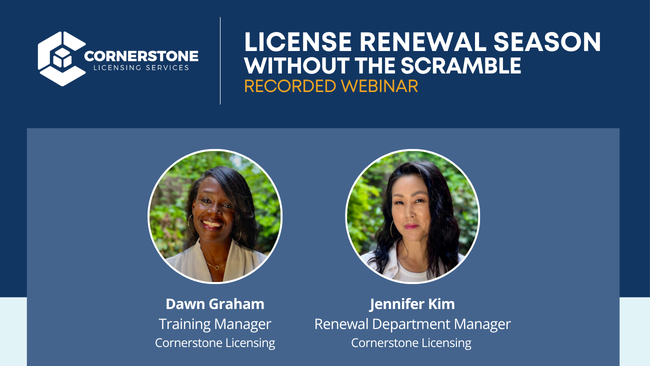
We covered the operational work behind getting renewals filed accurately and early. The team explained why renewal season starts well before November, how state-by-state requirements create bottlenecks, and where companies tend to run into trouble when changes, disclosures, annual reports, or supporting documents are still outstanding at the end of the year.
Q4 renewal timing, with many NMLS renewals opening around November 1 and many deadlines falling between 12/1 and 12/31
Separate license annual reports that may require financial statements, bond calculations, or other supporting documents
The difference between renewing through NMLS and handling renewals through direct state portals or paper processes
Common delays, including expired NMLS passwords, fingerprint requirements, credit reports, bond riders, and unresolved deficiencies
Why filing early can reduce approval delays, avoid system congestion, and give regulators time to review submissions
Material changes that often need to be reported within 30 days, including officer, owner, manager, address, and trade name changes
How one update in NMLS can affect multiple states, especially when documents or control-person records are incomplete
Deficiency tracking, regulator follow-up, and what can happen when a renewal is submitted without all required items
SPONSOR BANK TRANSITION READINESS CHECKLIST
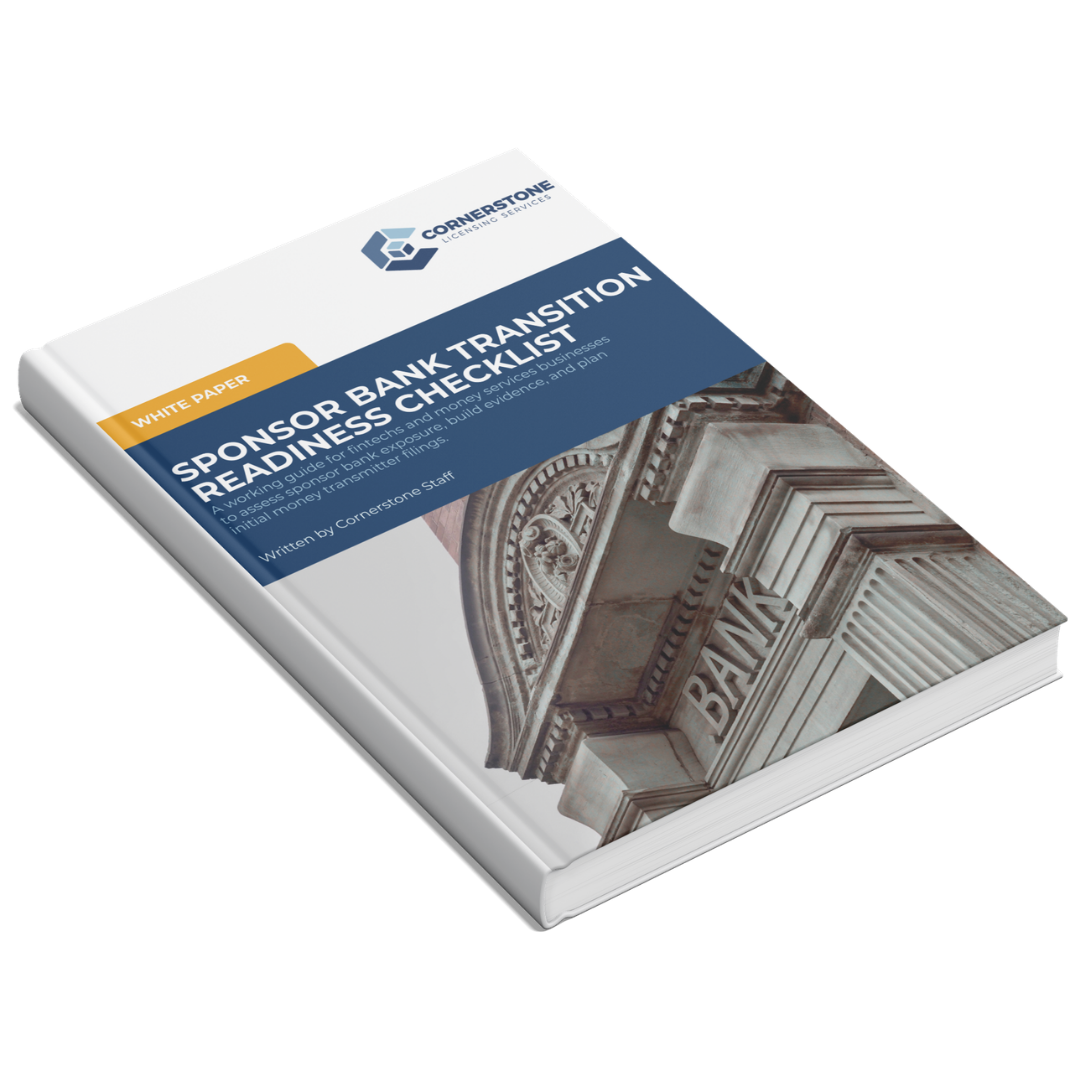
Working with a sponsor bank can help you launch faster by allowing you to operate through the bank rather than obtaining your own state licenses. But that convenience comes with a risk: your ability to operate depends on a relationship you don't fully control. Banks may end programs for a variety of reasons, including regulatory pressure, shifting risk priorities, mergers, or changing business economics. If that happens, the notice period in your agreement determines how much time you have to respond. This checklist will help you prepare now, so you're not starting from scratch if that relationship changes.
Inside the checklist:
Score your exposure
Build the evidence room
FinCEN first, then the filing wave
The parallel-run plan
OPERATIONAL CHANGES
FCC UPDATES TCPA REVOCATION RULES FOR CALLS AND TEXTS
The Federal Communications Commission (FCC) issued a final rule updating how consumers may revoke consent to receive certain autodialed calls and text messages. The rule allows callers to designate an exclusive revocation method in specified circumstances, making it important for companies to review their opt-out language, internal procedures, and vendor practices.
The rule takes effect November 25, 2026. For financial services companies involved in collections, servicing, lending, and customer support, the changes create an opportunity to review how revocation requests are received, routed, and honored before the new requirements become effective.
HAWAII BANS CASH-TO-CRYPTO KIOSK PURCHASES
Hawaii's Act 224 took effect on October 1, 2026, prohibiting digital asset kiosk operators from accepting physical U.S. currency in exchange for digital assets. The law continues to permit crypto-to-cash and crypto-to-crypto transactions, but each prohibited cash-in transaction may constitute a separate unfair or deceptive practice violation.
Unlike states that regulate kiosks primarily through transaction limits, fees, and disclosure requirements, Hawaii has effectively eliminated the cash-to-crypto portion of the kiosk business model. Operators serving Hawaii should review their transaction capabilities and business practices accordingly.
PROPOSALS & REGULATORY WATCH
NEW JERSEY BILL WOULD CREATE LICENSING FRAMEWORK FOR BNPL LENDERS
New Jersey lawmakers introduced A5664, the Buy Now Pay Later Act, on October 19, 2026. The proposed legislation would require companies acting as buy now, pay later lenders to obtain a license from the Commissioner of Banking and Insurance unless they qualify as an authorized lender or exempt organization.
The bill would also establish requirements for changes in control, annual reporting, seven-year record retention, consumer disclosures, dispute handling, and risk-based underwriting. It would authorize the Commissioner to establish loan-category permissions, fee limits, and operating rules while restricting certain unfair or deceptive practices and data-sharing activities.
The proposal remains in its early stages and does not currently impose new licensing obligations. BNPL providers operating in New Jersey should monitor its progress as lawmakers consider a more defined regulatory framework for the industry.
CSBS PRESSES TREASURY ON STATE-FEDERAL PARITY IN STABLECOIN RULE
The Conference of State Bank Supervisors (CSBS) urged the U.S. Treasury to preserve state-federal parity in its proposed rule implementing the GENIUS Act safe harbor provision. In its October 19 comments, CSBS argued that the proposal could disadvantage state-regulated approaches relative to federal oversight, raising questions about how stablecoin issuers may choose between state and federal regulatory pathways.
For nonbank digital asset and payments companies, the issue has implications for licensing strategy, regulator jurisdiction, and the long-term structure of the U.S. stablecoin market. As federal implementation continues, companies considering state-based or federal issuer structures should monitor whether Treasury revises the proposed approach.
ILLINOIS DIGITAL ASSET TAX IMPLEMENTATION STAYED UNTIL JULY 2027
Implementation and enforcement of Illinois' Digital Asset Tax Act have been stayed until July 1, 2027, under an agreement reached amid ongoing constitutional challenges. The law would require digital asset brokers to register and collect the tax, while customers would be responsible for self-assessing when brokers do not collect it. Certain out-of-state brokers would also face registration obligations based on a $100,000 receipts threshold.
The temporary stay provides additional preparation time but does not resolve the underlying legal challenges. Digital asset businesses should continue monitoring the litigation and any further changes to the implementation timeline ahead of July 2027.
WYOMING DIGITAL ASSET AND MONEY TRANSMISSION LEGISLATION
Wyoming's Select Committee on Blockchain, Financial Technology and Digital Innovation Technology has been reviewing legislative proposals that could reshape state oversight of digital assets and money transmission in 2027. Proposals under consideration include establishing a Wyoming Digital Asset Authority, allowing the use of stable tokens for certain state payments, modernizing money transmission licensing requirements, and introducing civil penalties for virtual currency kiosks.
The measures remain proposals rather than enacted law, but they offer an early indication of potential regulatory changes ahead of the 2027 legislative session. Digital asset businesses, payment providers, and money transmitters operating in Wyoming should monitor the committee's work as the proposals advance through the legislative process.
ENFORCEMENT
NEW YORK AG SECURES $480K PLUS DEBT RELIEF OVER TIME-BARRED SECOND MORTGAGE COLLECTION
New York Attorney General Letitia James announced an October 23 settlement with debt buyers and related entities over collection and foreclosure activity involving time-barred second mortgage debt. According to the Attorney General's office, the companies acquired more than 3,000 defaulted New York second mortgages and, in many cases, sought payments after the six-year statute of limitations for past-due mortgage payments had expired.
The settlement includes $240,000 in penalties, more than $242,000 in restitution, and a prohibition on future collection of expired debt payments. For debt buyers and mortgage-related portfolio operators, the case underscores the importance of reviewing statutes of limitations, account aging, and collection eligibility before pursuing payments or litigation.
MICHIGAN DIFS CONSENT ORDER LINKS SERVICING FAILURES TO STATE LICENSING OVERSIGHT
The Michigan Department of Insurance and Financial Services (DIFS) entered an October 19 consent order with West Michigan Private Capital Fund I, LLC, doing business as Benchmark Capital Finance, over alleged violations of Regulation X, the FTC Safeguards Rule, and Michigan's Mortgage Brokers, Lenders, and Servicers Licensing Act.
Under the order, the company agreed to pay a $15,000 civil fine, complete implementation of its servicing platform by October 31, and provide specified servicing records to DIFS by November 15. The order also requires the company to retain an independent third party for twice-yearly audits over two years covering escrow requirements, servicing practices, safeguards, and NMLS filing obligations.
For mortgage lenders and servicers, the action illustrates how operational weaknesses in servicing, recordkeeping, and systems can lead to broader scrutiny under state licensing laws.
Found This Useful? Let's Get You Set Up.
Start an application and an expert will tailor the next steps to your situation.