
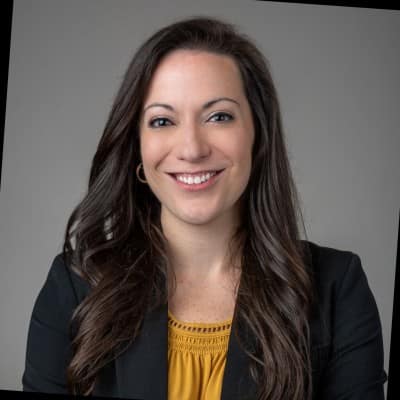
By Molly Weis
Vice President of Marketing and Communications, Numeracle
2/13/2019

The Daily Impact of Call Blocking and Labeling
By Molly Weis
As a collections organization using the voice channel to connect with your consumers, establishing a trusted connection is your bottom line. Yet, due to the increased measures put in place to protect consumers from illegal robocall scams, your numbers now come up listed as 'SCAM' or 'FRAUD,' or are incorrectly blocked before ever reaching the end user.
Complexity and frustration continue to mount amongst legal call originators who have experienced a 20-30% drop in contact rates over the course of the last year, according to Numeracle, Inc.
"Based on our evidence, the carriers and their analytics partners along with application solution providers cannot reliably identify illegal callers when they fail to reliably identify legal callers," Numeracle reported in response to the FCC's call for comments on Advanced Methods to Target and Eliminate Unlawful Robocalls, CG Docket No. 17-59.
This leaves us with the escalating problem of legal business calls continuing to be improperly classified as illegal, fraudulent robocalls.
Industries as diverse as accounts receivable management, resort, financial, healthcare, and retail are not alone in their struggle to recapture the effective use of the voice channel. In light of the challenges resulting from the changing calling ecosystem, positive brand interaction and right-party contact rates continue to decline as the deception arising from improper call blocking and labeling proliferates.
The Rise of Call Blocking and Labeling
Call blocking and labeling challenges began to increase swiftly upon the formation of a new group of analytics companies and call blocking and labeling application developers. These companies were established to identify illegal robocallers by analyzing call patterns, consumer's perception of calls, fraud reports, and additional data points to identify, label, and/or block fraudulent calls across the network.
Unfortunately, legal businesses have become caught in the crosshairs of these call labeling and blocking efforts.
The complexity of improving the accuracy of call blocking and labeling is made more challenging due to the discrepancies in how number labeling is presented across the network. No two service providers or analytics engines are perceiving your enterprise, your numbers, or the way you are using your numbers to reach consumers in the same way.
Each service provider treats the classification and delivery of 'labeled' calls differently, which means your consumers are experiencing a multitude of varying experiences depending on the call blocking or labeling services enabled.
The Process of Correcting Number Labeling
Through collaboration across the ecosystem, progress has been made in identifying actionable measures to improve the accurate labeling of your numbers across the network. To correct and replace improper labeling across analytics and app providers, an enterprise may identify its ownership and compliant use of its numbers through a registration and certification process.
By establishing a trusted calling presence across the ecosystem through registration and certification, as an enterprise, you are able to certify that you are not a 'FRAUD' or 'SCAM' and that your calls can be trusted. Through this process you are able to control how you want your calls to be presented to consumers by telling the network, "these are my numbers. This is me delivering wanted calls to my consumers legally and compliantly."
The Future of Our Changing Ecosystem
As we look to gauge the future of call blocking and labeling, we look to the STIR/SHAKEN framework of call authentication as the next major milestone advancement. The premise behind the STIR (Secure Telephone Identity Revisited) and SHAKEN (Signature-based Handling of Asserted information using toKENs) framework is to assign a certificate of authenticity to each call, which will act as a digital signature of trust.
A major result from the deployment of the STIR/SHAKEN framework will be the successful identification and blocking of illegally spoofed calls, one of the highest-volume, most nefarious types of illegal robocall scams. "By removing the uncertainty around the true origination of a call, bad actors will no longer be able to illegally make calls appearing to originate from an enterprise's legally owned numbers," said Rebekah Johnson, ATIS/SIP Forum IP-NNI Joint Task Force Member and Numeracle CEO & Founder.
"Network implementation of a 'Know Your Customer' process allows legal entities to properly identify their numbers and keep their trusted brand identity out of the hands of illegal actors."
As the industry works to implement these positive improvements, through the registration of your numbers and certification of your Trusted Entity status, you are now able to prevent your numbers from being listed as 'FRAUD' or 'SCAM' across the network. This means that while we wait for STIR/SHAKEN and additional advancements to enterprise calling security to be developed and deployed, a little bit of trust is already returning back to voice channel communications.
Found This Useful? Let's Get You Set Up.
Start an application and an expert will tailor the next steps to your situation.