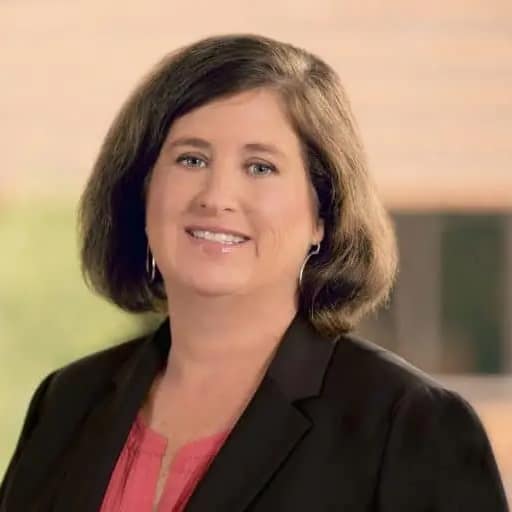
By Caren Enloe
Partner, Smith Debnam Narron Drake Saintsing & Myers, L.L.P.
8/21/2018
As Kavanaugh Looks to Replace Kennedy on the Supreme Court, What Will be the Impact on the Collection Industry?
By Caren D. Enloe (originally posted on Minnlawyer.com)
When news broke that Justice Kennedy would be retiring after a thirty-year career as the swing vote on an increasingly partisan Supreme Court, attention immediately focused on who his replacement would be. Now that Brett Kavanaugh, who currently sits on the D.C.
Circuit, has been nominated to fill that vacancy, the next question is what affect, if any, will his presence have on future cases interpreting the federal Fair Debt Collection Practices Act (the "FCPA") and other federal statutes impacting the debt collection industry. Currently, it is anticipated that at least one debt collection issue will be heard by the court in the next term.
The Court recently granted certiorari to determine whether the FDCPA applies to nonjudicial foreclosures. See Obduskey v. McCarthy & Holthus LLP, No. 17-1307. A review of recent cases reveals that Kennedy was a reliable vote for the debt collection industry and suggests that Kavanaugh will likely be as well.
The three most recent Supreme Court decisions affecting the collection industry are Midland Funding, LLC v. Johnson, 137 S. Ct. 1407 (2017), Henson v. Santander, 137 S. Ct. 1718 (2017), and Sheriff v. Gillie, 136 S. Ct. 1594 (2016). In each case, Kennedy's vote favored the debt collection industry.
Midland Funding was decided by a 5-3 margin with Justice Kennedy in the majority. In Midland Funding, the Court held that the filing of a proof of claim on time barred debt does not violate the FDCPA. In Henson, which was Justice Gorsuch's first opinion on the Supreme Court, a unanimous Court held that a company may collect debts that it purchased for its own account without triggering the statutory definition of a "debt collector" under the FDCPA.
Finally, in Sheriff, another unanimous opinion, the Court held that a special counsel's use of the Ohio Attorney General's letterhead in their efforts to collect debts owed to the state did not violate the FDCPA.
Will Judge Kavanaugh, if confirmed by the Senate, vote in a similar way to Justice Kennedy in cases affecting the debt collection industry? It's hard to say, but his appellate record indicates it is likely. During his time as a judge on the DC Circuit, Judge Kavanaugh's exposure to the FDCPA has been limited.
In fact, a search reveals only two cases heard before Judge Kavanaugh involving the FDCPA. In Jones v. Dufek, 830 F.3d 523 (D.C. Cir. 2016), a unanimous panel (including Kavanaugh) affirmed the district court's granting of a motion for judgment on the pleadings in favor of the debt collector and endorsed the use of a Greco disclaimer.
In Molina v. Ocwen Loan Servicing, 545 Fed. Appx. 1 (D.C. Cir. 2013), an action involving mortgage servicing and debt collection, a unanimous panel (including Kavanaugh) affirmed a dismissal of the complaint based upon a lack of Article III standing.
It's worth noting that Judge Kavanaugh was not on the panel that decided the court's recent high-profile Telephone Consumer Protection Act ("TCPA") decision, ACA Int'l v. FCC, 885 F.3d 687 (2018). In that matter, the D.C.
Circuit sided with ACA International, a national industry trade group, in its challenge of the FCC's Declaratory Ruling concerning the TCPA.
Not surprisingly, Judge Kavanaugh has heard multiple cases involving the CFPB. For instance, Kavanaugh wrote the panel decision in PHH Corp v. Consumer Fin. Prot. Bureau, 839 F.3d 1 (DC Cir 2016) striking down the provision allowing the agency head to only be removed for cause.
The DC Circuit ultimately granted en banc review in that case, and Judge Kavanaugh dissented along the same lines when the en banc court held that the CFPB's structure was constitutional. Kavanaugh also wrote for the Court in State Nat'l Bank of Big Spring v. Lew, 795 F.3d 48 (DC Cir 2015), and held that a bank regulated by the CFPB had standing to challenge the constitutionality of the agency.
Outside of the debt collection context, Kavanaugh is considered a strict constructionist who believes judges should "strive to find the best reading of the statute, based on the words, context, and appropriate semantic canons of construction." These tendencies, Kavanaugh's perceived skepticism of the CFPB, and his votes in Jones, State Nat'l Bank and PHH Corp suggest that, if confirmed, he may be a reliable vote in cases affecting the debt collection industry.
Found This Useful? Let's Get You Set Up.
Start an application and an expert will tailor the next steps to your situation.